The design sameness tax and how to avoid it
Everything looks the same
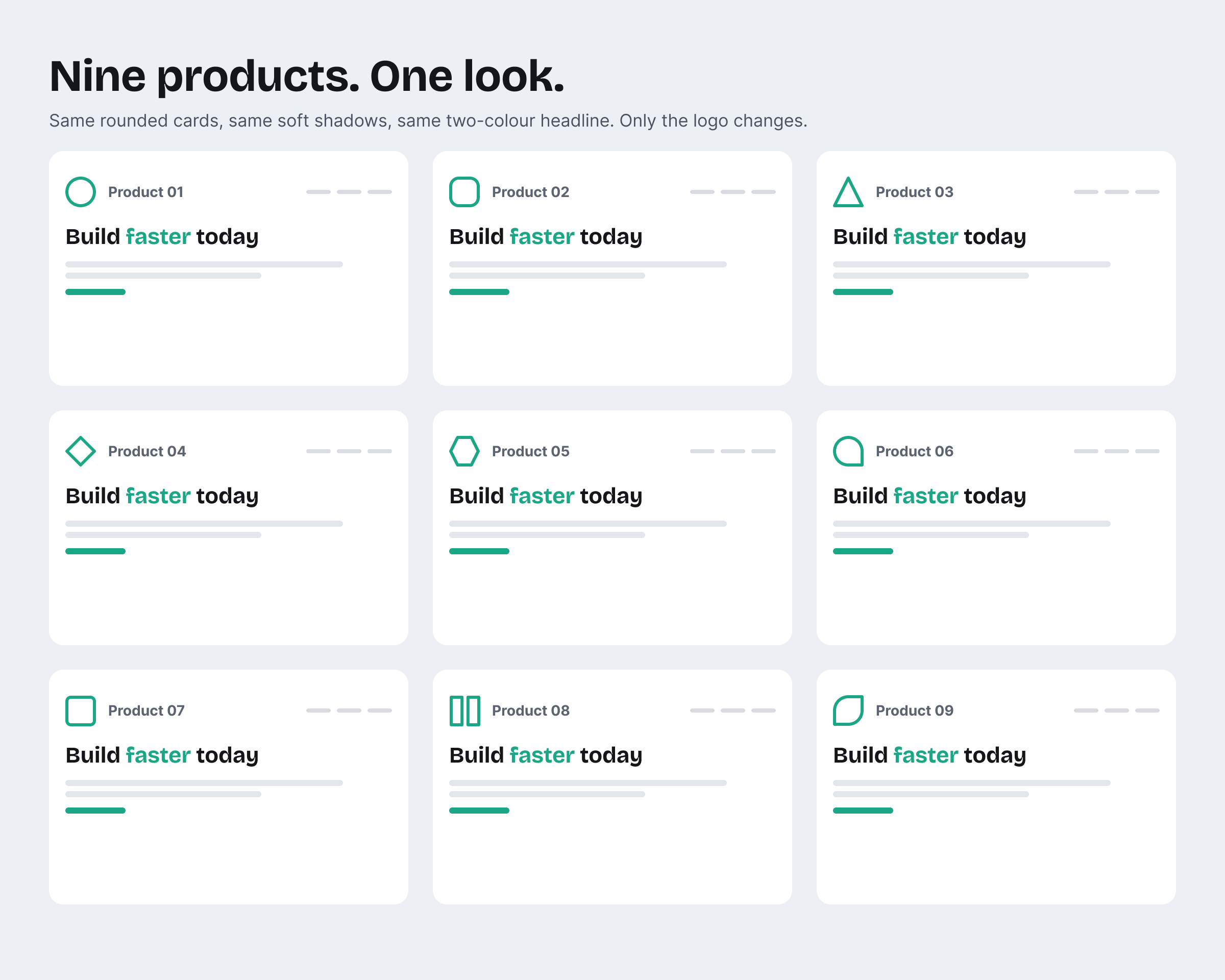
Open five new software products launched this year. Rounded cards, soft shadows, a headline with one word in a second colour. Different logos, same experience.
It is not only websites. Apps, dashboards, landing pages and slide decks are converging on the same look. They are functional, and they are not wrong. But the spark is not there, and my trust holds back. I do not fully believe the product is what it says, that anyone properly thought it through, or that the promise is really there.
It feels as if someone looked at the output and decided it was good enough. Nobody chose this deliberately. When nobody chooses, the average wins, and the average is what AI tools produce by default. The result may even be better than what came before, or there may have been nothing before. That is not the point. The real question for a business owner or a design lead is not whether AI can make a screen. It is who decides what eventually gets launched and is still loyal to your brand values, not just by colours and logo, but has its distinct feel.
Why everything converges
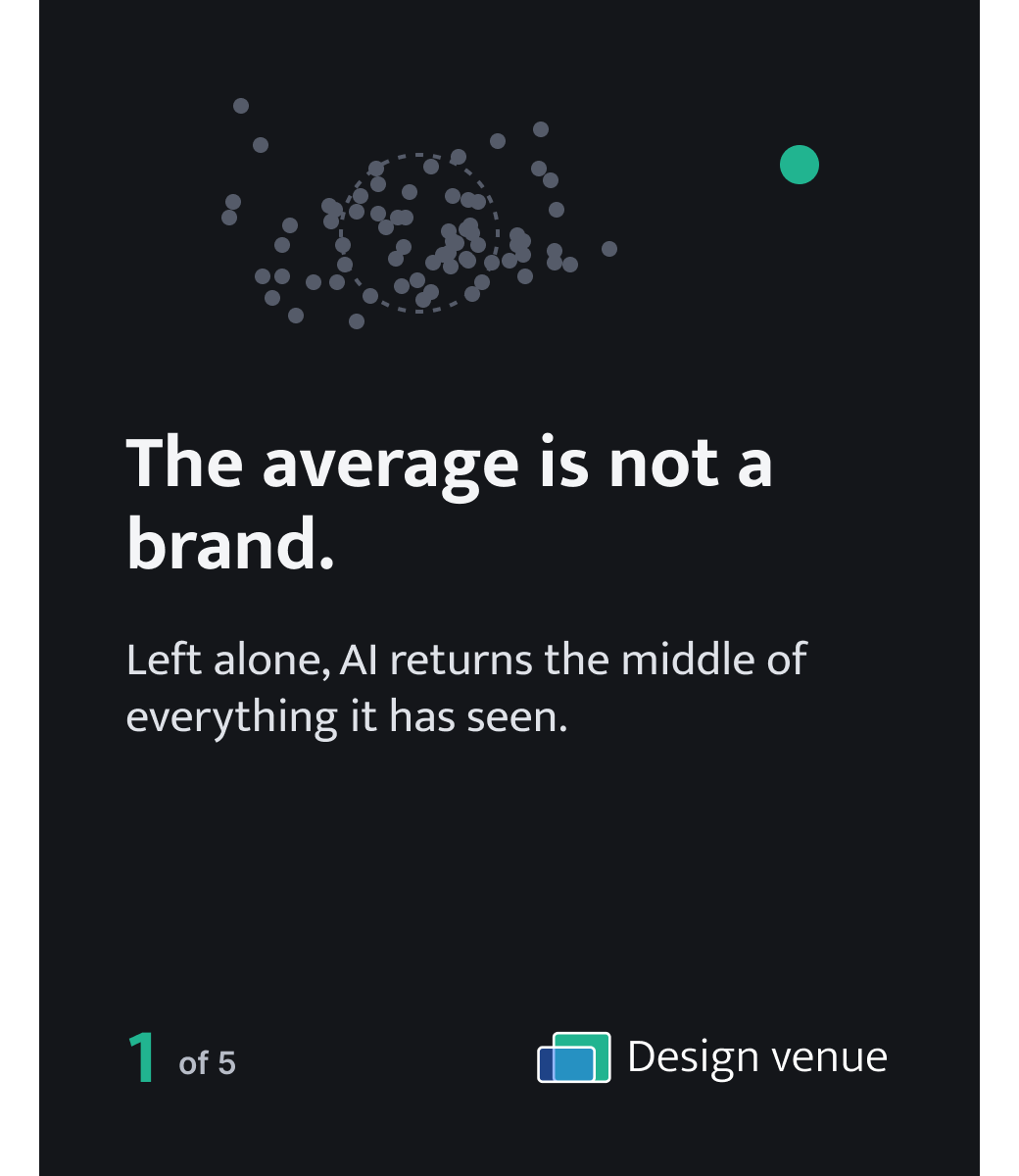
AI design tools learn from what already exists, so they return the most common answer to any request laid out in popular templates and using default component libraries.
The result is a visual consensus: clean, consistent and lost in sameness. It is a vanilla design, white label. Without care, reputable brands end up producing the same digital output as businesses with first digital presence, creating an invisible, deferred tax to be paid later in customer loyalty and hard numbers.
The sameness tax
Sameness has a price. When everything looks alike, the cue that says "this is us" disappears, users compare on price, and a business with no distinct identity has no premium potential.
If we were all happy with a lamp that simply gives light, there would be only one lamp. We want more than light, and design is how we get it. The challenge today is to recognise the value of strategic design and not to stop at seemingly good enough design that can be generated in seconds.
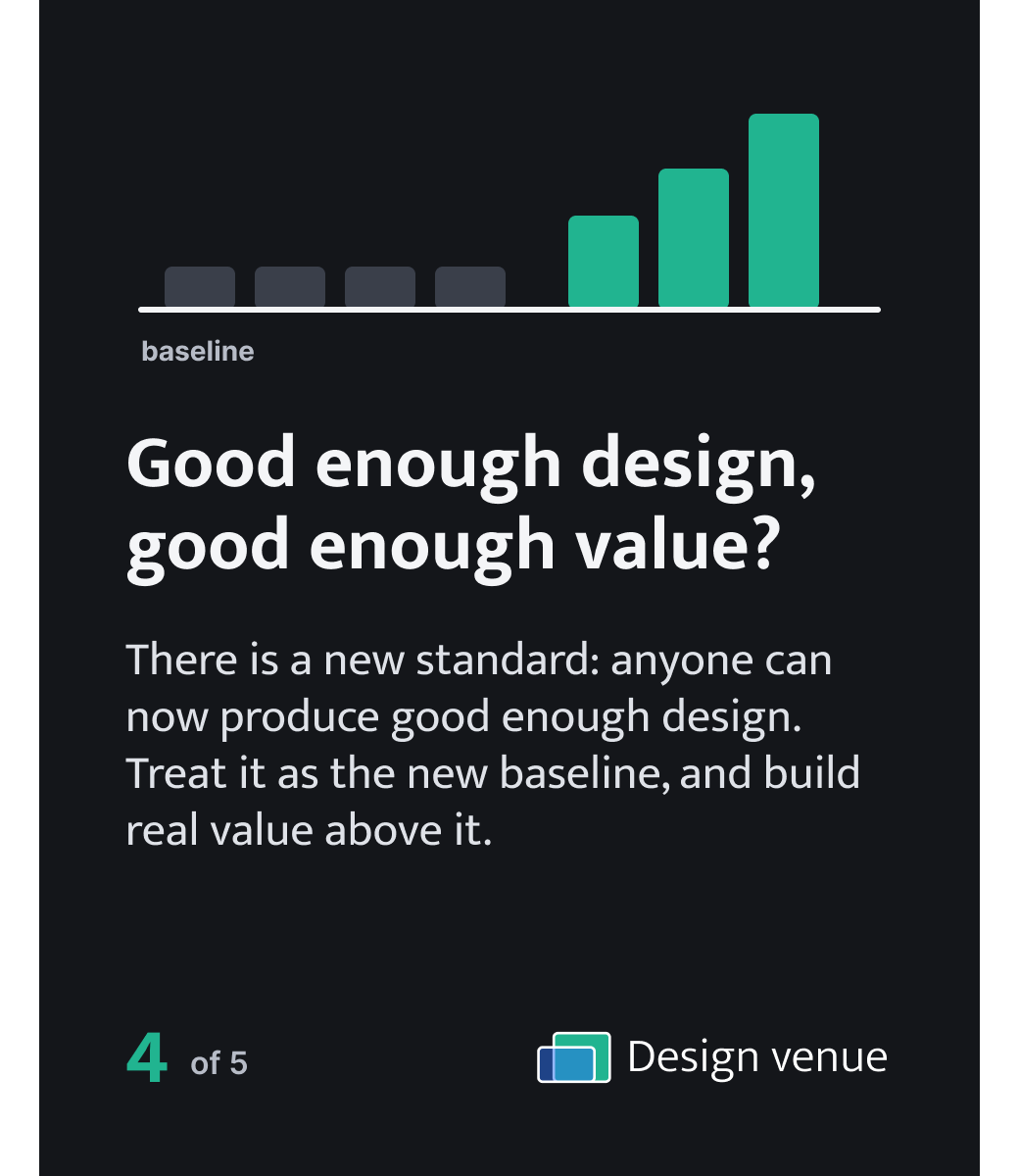
It is critical to acknowledge that AI has raised the general standard. A clean, consistent, working interface is the new baseline. The value of design is what happens after that:
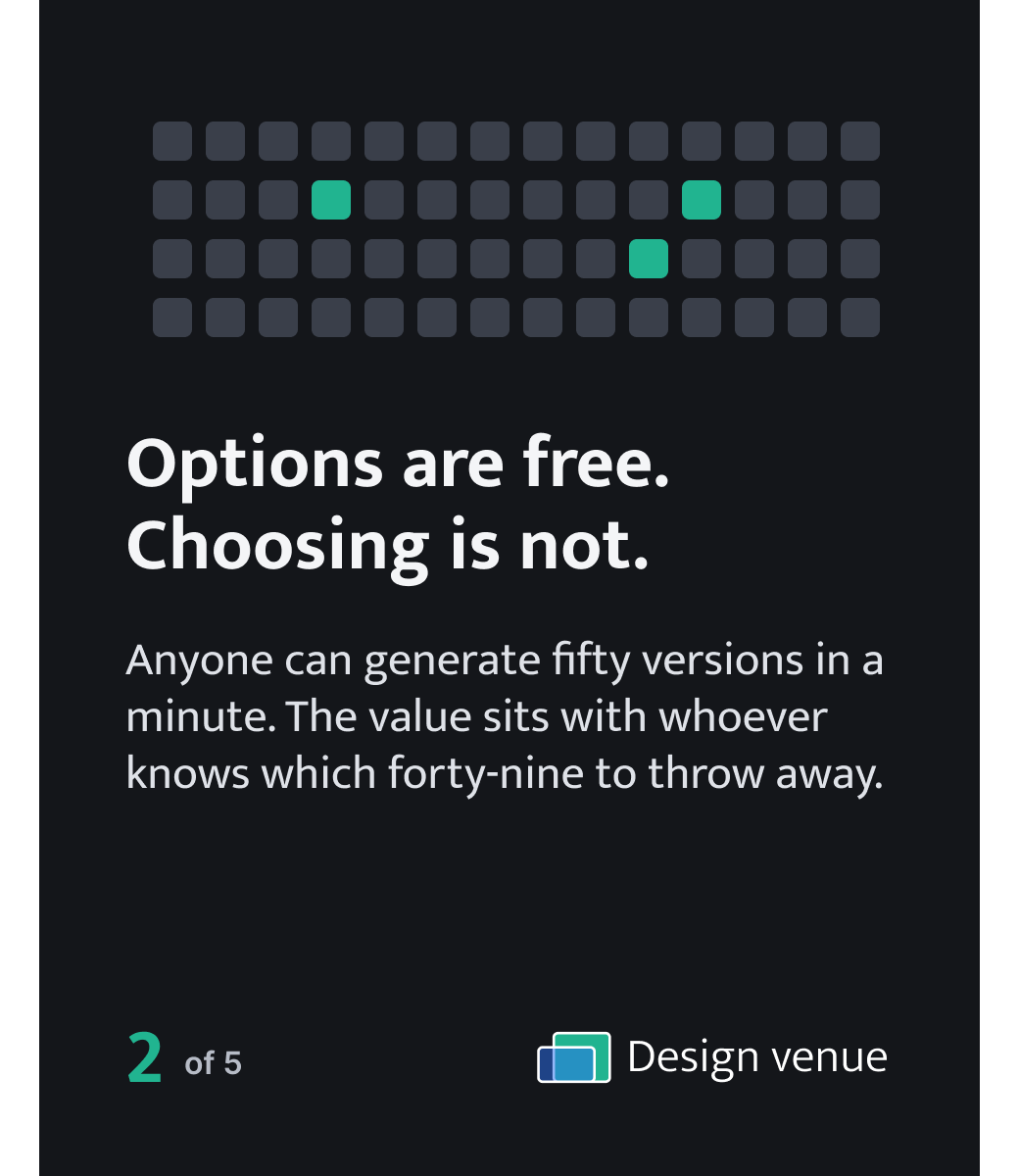
Picking what works. AI offers endless options. A designer chooses the one that fits their user and brand.
Removing what does not. Simplicity is subtraction, and tools that generate more rarely remove anything.
Guiding the process. Use AI for speed, with clear direction and judgment to get through the overload of information and design options.
Distilling. Highlight the value of the product and the brand so a user sees it in seconds.
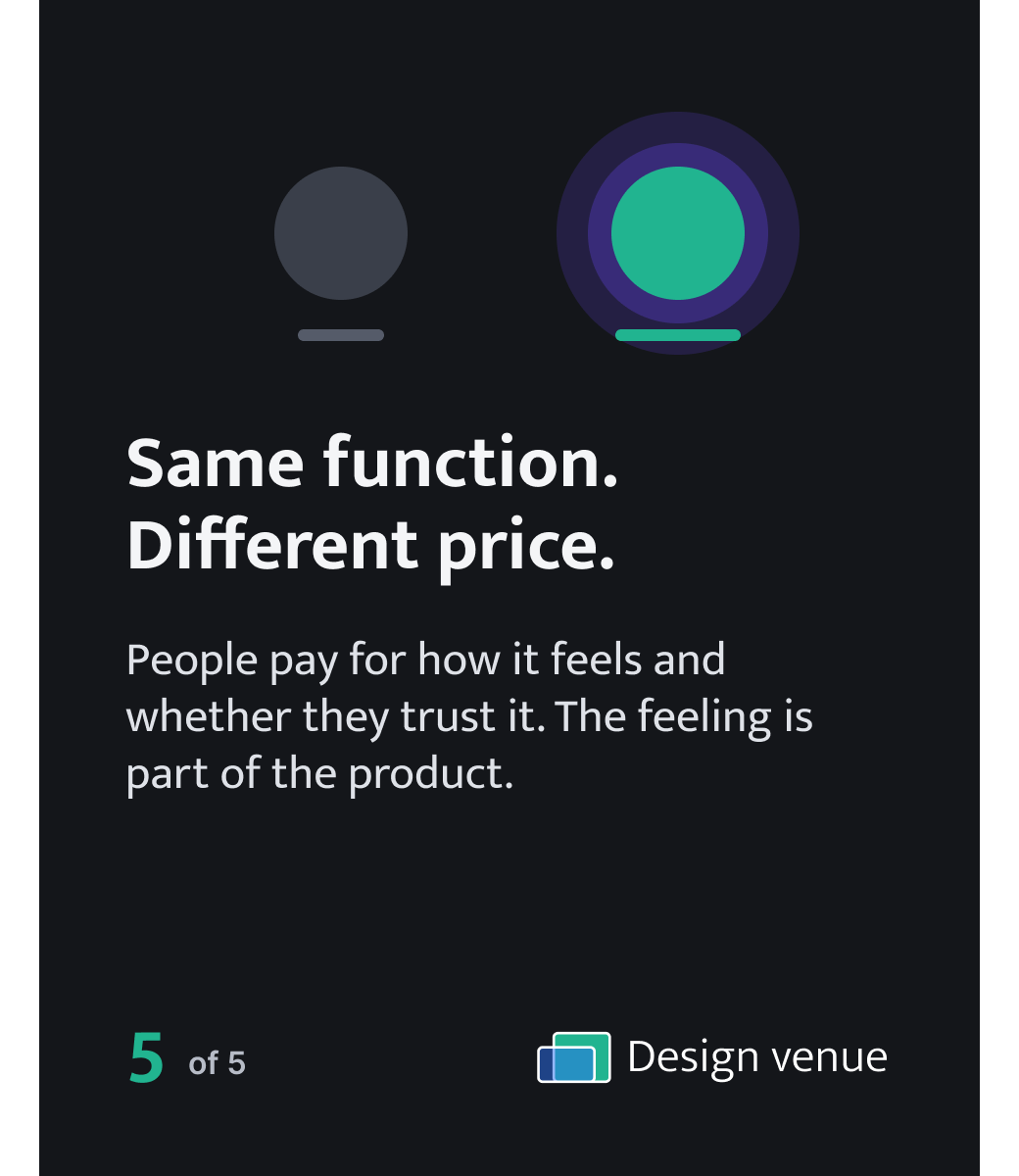
Same function, different value
Think of a lamp, a chair, a car or a pair of trainers. Each does the same job at prices that run from cheap to extravagant. People who pay more are buying the feel, quality and the story. The function is shared, and design is the reason to choose one over another.
Digital products are heading the same way. Anyone can now build one in minutes, but it is worth only as much as its trustworthiness, clarity, ease of use and appeal. This is achieved through refined designs by understanding user intent and priming their choices
AI makes screens. Designers make decisions.
The designer's output was never pixels. Design management research frames the work as design strategy, design process and implementation (Best, 2006), and implementation is the stage AI has taken over fastest. The value now sits in the other two, which is why design has to be a strategic decision and not a finishing step.
Designers question the problem. A prompt answers the question it was given. A designer asks whether it was the right question.
Designers bring originality. AI is trained on what already exists, so it returns the average. Something new still needs distinct personality.
Designers polish ideas into offers. There are endless ideas to choose from. Picking the one worth building, and making it attractive to users, is a human call.
How to avoid the sameness tax
Distinct design earns trust, a price premium and loyalty. Protecting it takes a few clear choices.
If you approve design budgets:
Ask of any design, AI-made or not: how does this make us more distinctive and support our business goals?
Judge design on market share, trust and retention, not on looks or speed of production.
If you lead a design team:
Use AI for speed on the average parts of the work.
Spend the saved time on problem framing, user insight and the choices that give the product more impact and make it more desirable, clear and usable.
For anyone using AI to make design:
Before opening the tool, write down what your brand stands for, how it should sound and what users should feel. Then choose where the default does not serve your users or your brand and replace it with something deliberate. For example: the customer's real problem instead of a slogan, your own illustrations instead of generic icons, your own voice instead of default cheerfulness.
Feed it specifics, such as real user research and your own voice and imagery. Generic prompts return the average.
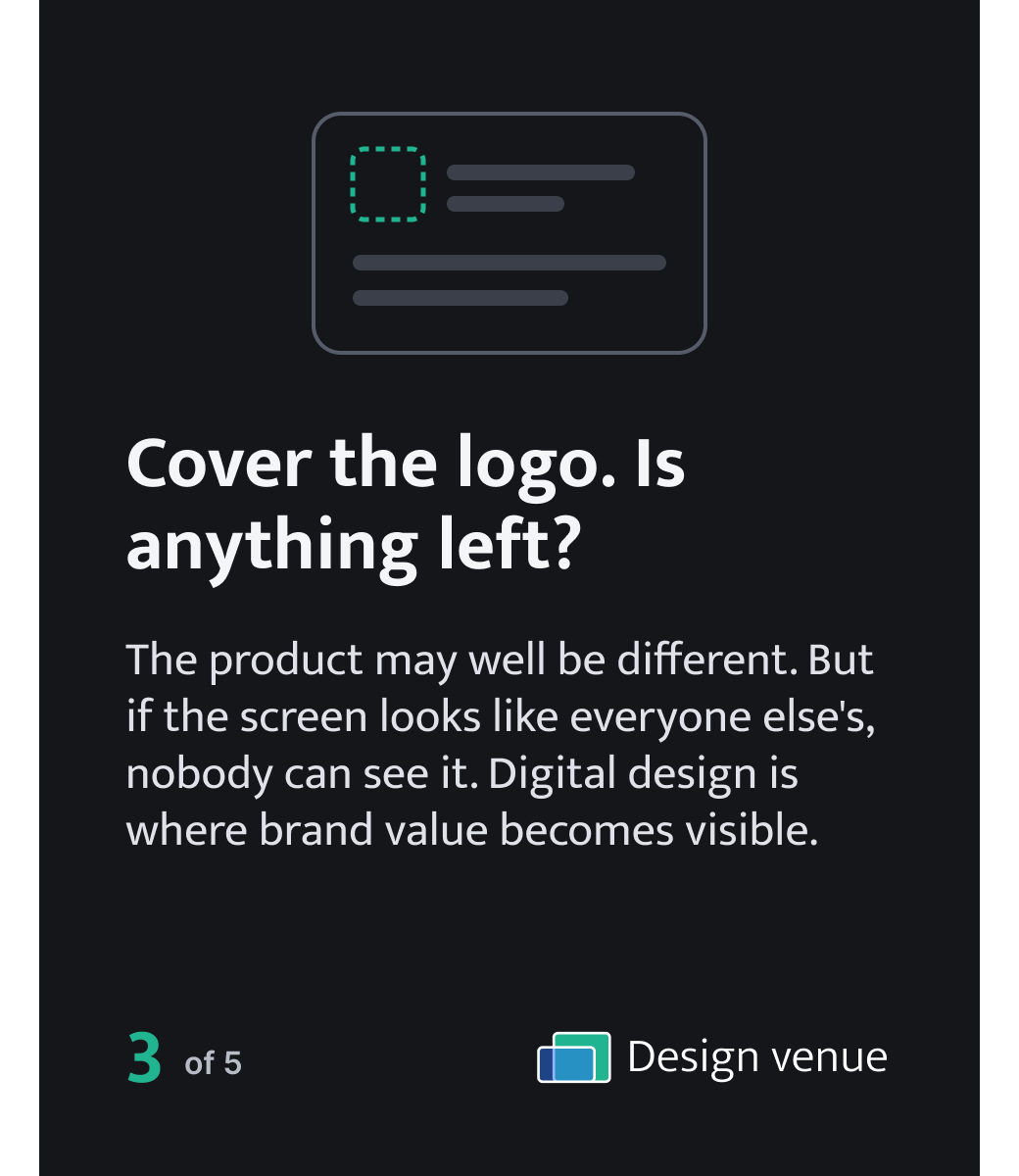
Run a swap test. Cover the logo. If a competitor could use the page unchanged, it is not finished.
Beyond the new standard
AI is like electricity. When it arrived, it opened up opportunities nobody had imagined, and we did not stop at the bulb. AI has raised the floor in the same way. A decent, consistent product is now cheap for everyone, which is exactly why decent and consistent no longer set anyone apart.
To be exempt from the sameness tax, make deliberate choices. The designer is now a conductor, directing an orchestra of agents to deliver quickly, with a fine hand and a clear idea of what the result should be and how it should affect the audience. The tools have changed. The purpose has not.
Swipe through the slides to get the key ideas from the article