When AI becomes your engineer: what happens to design?
I started coding recently. Who hasn't? Did I do the training? Yes, if that qualifies as such: I talked to an AI agent and asked it to make what I had in mind - in plain language. Or in fact I asked ChatGPT to make a prompt for Claude Agent. And it just coded away, quite stunningly, with me sitting back and pressing Allow and Keep buttons from time to time.
This is amazing.
For the first time I can make my designs truly live beyond Figma prototypes without hiring an engineer. Basically the agent is my engineer, if I know what to ask from it. This is what the democratisation of coding looks like, and it's hard not to be excited about it.
But it also raises questions I can't stop thinking about:
What do we actually do with a world full of half-decent apps?
How does the design survive or evolve?
And finally, are more apps really what we need?
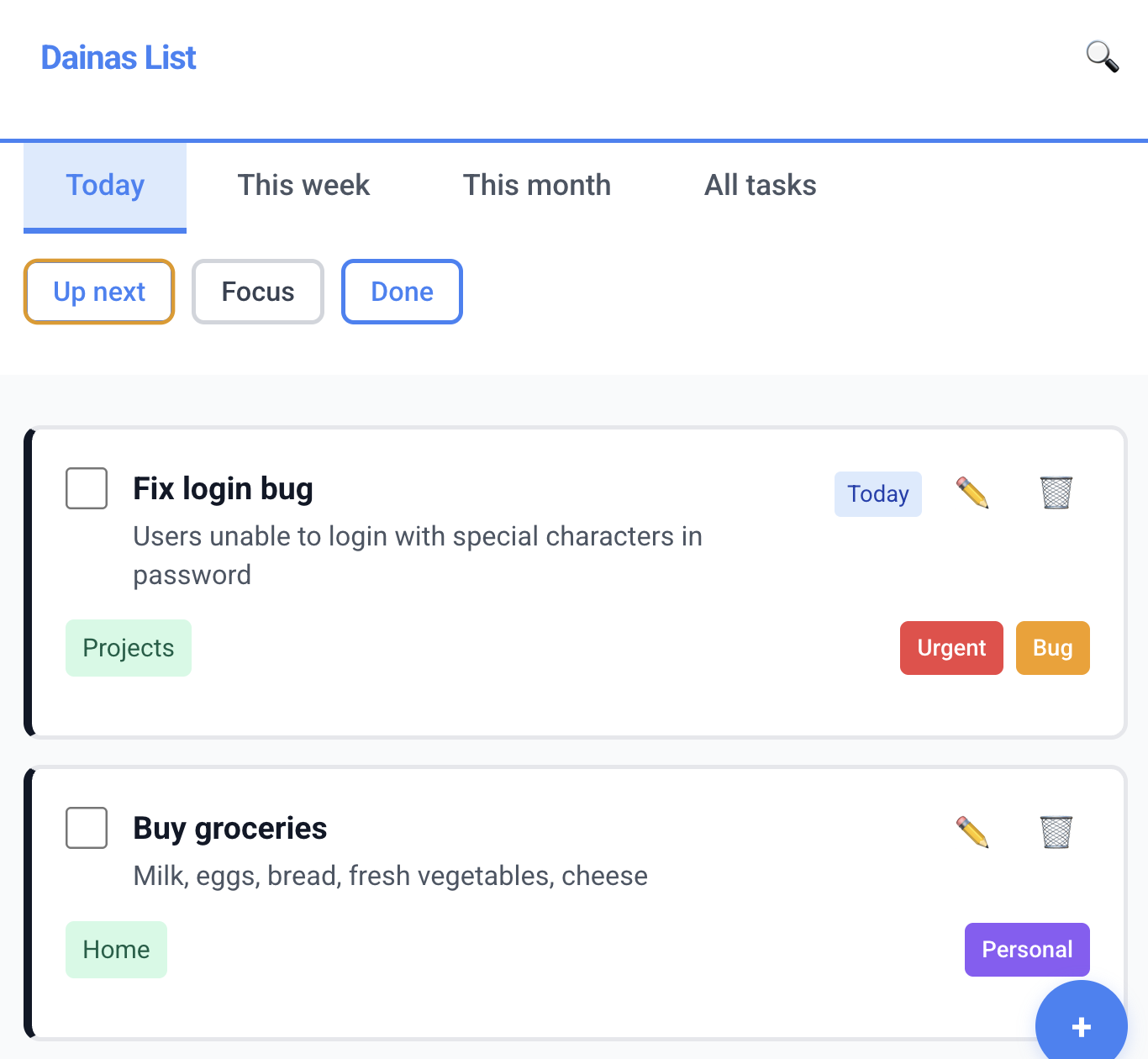
Half-baked to do list app
Even if the output isn’t exactly what you had in mind, you can still get a pretty decent app that looks and functions just fine, using familiar UX patterns and even a modern UI with micro-animations and gradients. If it’s something simple like a to-do list or a Trello-style board, that’s often all you need.
I did ask it to build a zombie game to help kids learn French sounds. That did not meet my kids expectations exactly :)
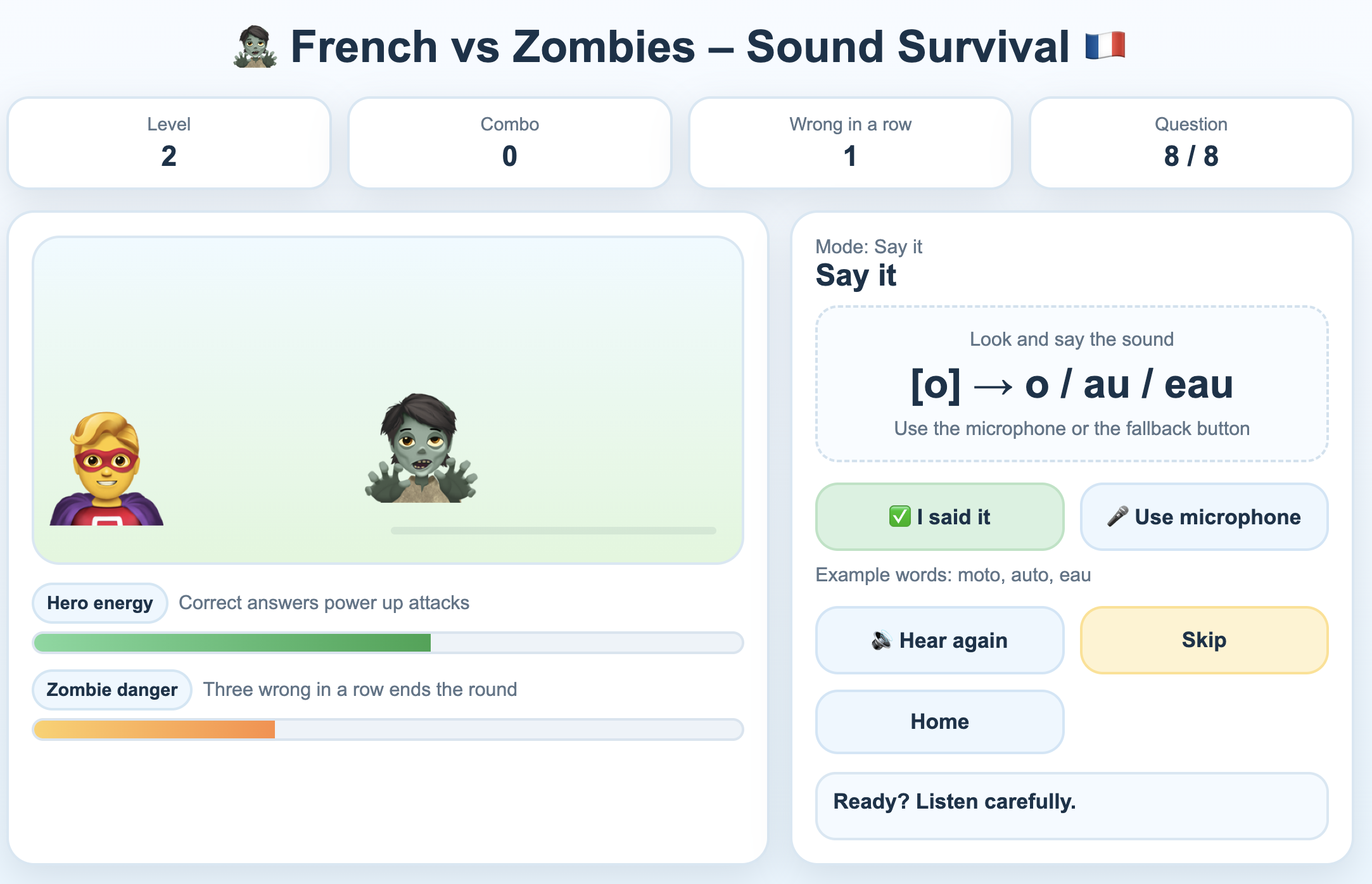
Sound survival game
Plethora of useless apps?
Agentic AI has changed something fundamental here, and not just for designers. Building is no longer the hardest part. And too often, design thinking is no longer part of the process either. We’ll probably experience a plethora of half-baked apps, not only bad looking, but weak in their purpose, because good user experience starts with understanding the goal, addressing real needs, and designing a clear, frictionless flow of interactions, as well as a visual interface that elevates user experience.
Anyone can now deploy a working application without having thought seriously about all of these aspects.
The old barrier, needing a developer, explaining your idea, justifying the investment, is mostly gone. That friction used to filter out weak ideas. But on the other hand, it also did not allow many good ones to show up. For years, great ideas quietly disappeared simply because the person behind them couldn’t code or couldn’t get access to resources to make their idea live.
Now the gates are open in both directions. We’ll probably see a wave of thoughtless products as well as products that will finally get their chance.
A perfect app, for one
There's also another possibility emerging alongside that. If building is now this accessible, the most interesting apps may not be the ones shipped to millions of people but the ones built for an individual, a team, an organisation. A small business owner generating exactly the tool for their team’s workflow without the expensive and time consuming process it used to be. A teacher, an accountant, a logistics coordinator who has been working around broken software for so long they've accepted it with Stoic peace as a thing they cannot change.
These people are about to discover they can build the thing they always wished existed. And some of them will produce some of the most honest, purposeful products we've seen as their purpose will not be to impress investors or hit a feature roadmap, but a genuine need which we designers are always after and have trouble getting right through countless user research and testing sessions.
This is truly new territory for design. The role has always involved advocating for users, but what happens when the user is also the builder? When the person with the problem is the same person shipping the solution?
The usual distance between designer, developer, and end user collapses, and something more interesting takes its place.
An opportunity to put design thinking directly in the hands of people who have the clearest possible understanding of the problem, because they live with it every day.
When Steve Jobs put a personal computer on a desk in 1984, the radical idea was the belief that ordinary people should have direct access to powerful tools without needing a specialist to operate them. Computing was the domain of institutions and engineers. The Mac made it personal.
What's happening now rhymes with that moment: the ability to build software is moving from a specialist skill to something anyone can access, and the implications are just as hard to fully see from where we're standing. Jobs understood that giving people the tool was only half of it - the other half was making sure the tool was shaped around how humans actually think and work.
We all know what a bad PowerPoint looks like. We've sat through enough of them. But we've also seen how the same tool has helped millions of people communicate their message with more clarity and impact. That's exactly where we are with agentic AI right now. The tool is in everyone's hands.
Are we entering a collapse of technological timelines?
And yet printed posters still hang on the walls and paper forms still get handed over counters. Technology moves fast, but people change more slowly.
So, the real design challenge is closing the gap between what’s technically possible and what people feel ready to use.
Though that gap doesn't always close gradually. Sometimes it gets skipped entirely. As an example, the post-soviet countries like Latvia and Estonia never really had an era of legacy banking infrastructure to dismantle. After regaining independence they leaped over the old systems straight to internet banking, contactless payments, and fully digital public services while parts of Western Europe were still cashing in invoices using bank checks and had much slower deployment of the internet.
The leapfrog was possible precisely because there was no established system comfortable enough to resist the change. It's a useful reminder that the countries and people who seem furthest behind a technology sometimes end up furthest ahead because they have less to unlearn.
That dynamic is playing out again now.
There's a whole generation of people who never felt fully at home in the app world, intimidated by error pop-ups, afraid of tapping the wrong thing, quietly relieved whenever a younger family member sorts their phone out. For them, an agent you simply talk to, that doesn't crash or ask you to update or redirect you somewhere unexpected, might be the most natural digital interface they've ever encountered; something genuinely easier in its entirety.
They may not transition to the next version of apps at all, skipping that chapter altogether.
And so might the generation coming in now - kids who are growing up treating conversation as the default interface, for whom tapping through a grid of icons to complete a simple task may already feel like a strange way to do things.
The ability to build has opened up faster than our ability to decide what should be built.
Like most big shifts, this moment brings both noise and opportunity.
It’s tempting to look at this moment either with excitement or with worry. Like most revolutionary and at the time scary shifts, it will produce both noise as well as new opportunities.
If agents are becoming our engineers, helping with intention becomes the designer's mission.
That feels like a good moment for design thinking. Maybe the best one yet.